Horticulture 101 Horticulture is the science and art of cultivating plants. It is a branch of agriculture that deals with garden crops, generally fruits, vegetables, and ornamental plants. It involves the study of plant growth, propagation, and their responses to environmental factors. Horticulturists work in a variety of settings, from small family-owned farms to large
Horticulture 101
Horticulture is the science and art of cultivating plants. It is a branch of agriculture that deals with garden crops, generally fruits, vegetables, and ornamental plants. It involves the study of plant growth, propagation, and their responses to environmental factors. Horticulturists work in a variety of settings, from small family-owned farms to large commercial greenhouses, and their expertise is crucial to the production of food, ornamental plants, and other agricultural products. Horticulture also encompasses landscape design, plant conservation, and research into plant diseases and pests. Horticulture plays a significant role in our daily lives by providing us with fresh produce, beautiful gardens, and a better understanding of the natural world.
Types of horticulture
There are numerous major branches of horticulture, they include :
Olericulture – production of vegetables
Pomology – production of fruits and nuts
Viticulture – production of grapes
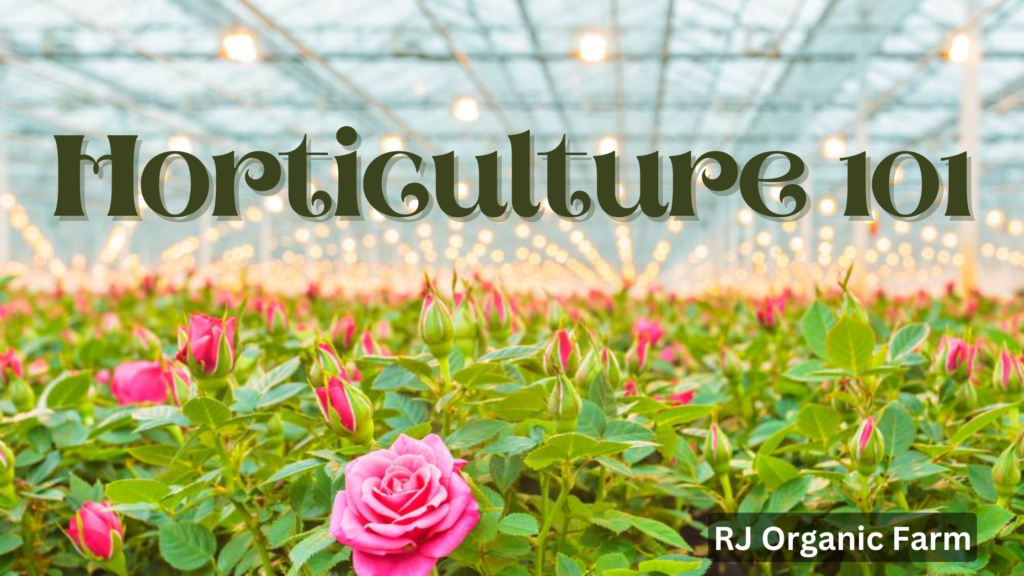
Floriculture – production of flowers and ornamental plants
Turf management – the production and maintenance of turf grass for sports, leisure and amenity use.
Arboriculture – cultivation and care of individual trees, shrubs, vines and other perennial woody plants.
Landscape horticulture – the selection, production and care of plants used in landscape architecture.
Post-harvest physiology – deals with the post-harvest handling, processing and marketing of horticultural products. It also includes grading, packaging and storage.
Environmental horticulture – the science and management of verdant areas.
Interiorscaping – the science and art of using indoor plants. It plays an important role in house, hotel, office and mall decor.
Spices crops culture – deals with the cultivation of spice crops, including pepper, nutmeg and cardamom.
Plantation crops culture – deals with plantation crop growth.
Medicinal and aromatic plant culture – deals with the growing and handling of medicinal and aromatic plants.
Horticulture vs Agriculture
Horticulture
Although horticulture is generally classified as a subdivision of agriculture which deals with plant gardening, both are not the same. Some of the techniques employed are used interchangeably in both horticulture and agriculture. This is the reason both are easily related.
Horticulture is defined as the science that employs special techniques and methods to cultivate plants, including methods used to properly condition the soil for seed or tuber planting. The domain of horticulture includes cultivation, plant propagation, breeding of plants, production of crops and plant physiology. It also includes the biochemistry and genetic engineering of plants. The plants that are looked at are mainly vegetables, trees, flowers, turf, shrubs, fruits and nuts. Horticulturalists carry out extensive research in their domain to get better quality crop yields, improve their nutritional value to humans, make crops pest and disease resistant and adjust to environmental stresses. The most notable difference from agriculture is that horticulture deals with small-scale gardening and usually in enclosed gardens (although this is not a necessity), while agriculture is done on a large scale with extensive crop cultivation.
Agriculture
Agriculture is the science of growing food crops and rearing animals for farming. It involves the whole web of processes employed in the redirection of the natural flow of the food chain. The natural food web starts with the process of photosynthesis. Herbivorous animals eat plants as their food and carnivorous animals will eat the herbivores for food. Dead animals and plants are decomposed by bacteria and return to the soil as plant nutrients and the whole chain repeats afresh. Agriculture rearranges this process so that plants are protected for human consumption. Although plants can be grown specifically for animal (herbivores) consumption like cattle, which is in turn reared for human consumption.
Agriculture can be divided into two categories, conventional and sustainable agriculture. Conventional agriculture deals with modifying some environmental factors like trees, soil tilling, and irrigation and all activities that favour single-crop growing especially for crops like wheat, rice and corn. Sustainable agriculture is where ecological principles are employed in farming. It is also known as agroecology. It aims at sustainable farming practices that involve planting a variety of crops together so the farming garden will never be bare at any time.
Why is it so important?
Enriches Diet
Horticulture provides vital nutrients for a balanced diet. Diets low in fruits and vegetables contribute to some of the world’s most widespread nutrition deficiency diseases.
Gender Equity
Vegetables, fruits and cut flowers are often grown and marketed by women, but women often have less access to markets, land, inputs and education. Addressing these constraints that places have, women growers are on the path to increasing productivity and expanding horticultural markets.
Improved nutrition of plants
Horticulture has led to hybrids of plants that increase the nutritional value of the fruits or vegetables the plant yields. Scientists can also crossbreed nutritional strains with other strains to produce other desirable traits. For example, they could cross a nutritional strain of tomatoes with a strain with improved flavour to breed tomatoes that taste great and have a higher nutritional value.