Types of Organic Farming Organic farming is described as an agricultural process that uses biological fertilisers and pest control acquired from animal or plant waste. There are two types of organic farming : 1. Integrated Farming System (IFS) 2. Pure Organic Farming Integrated Farming System (IFS) An Integrated Farming System, or IFS, is a promisng approach for
Types of Organic Farming
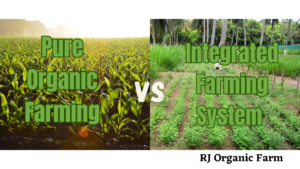
Organic farming is described as an agricultural process that uses biological fertilisers and pest control acquired from animal or plant waste. There are two types of organic farming :
1. Integrated Farming System (IFS)
2. Pure Organic Farming
Integrated Farming System (IFS)
An Integrated Farming System, or IFS, is a promisng approach for increasing the productivity and profitability through recycling the farm by-products and efficient utilisation of available resources. This system is based on the concept that “there is no waste”, which means that waste from one part becomes an input for another aspect of the procedure. This system furthermore preserves environmental quality and ecological stability.
Objectives of IFS
The Integrated farming system enhances the productivity rate per unit. Waste is properly managed through the IFS system. The produce of all component enterprises are completely utilised. The health of the soil is managed properly when using this agricultural system.
Components of IFS
Piggery – Pig dung acts as excellent pond fertiliser and some fishes feed directly on the pig excreta
Poultry – Egg, meat, manure, fodder for pigs, source of income
Duckery – Duck houses are constructed on pond banks ; hence no additional land is required
Fishery – Pond water is used for cleaning pigsties and bathing the pigs
Plantation Crops – Plantation trees act as a shade for the fishery pond or as fodder production between orchard trees to prevent soil erosion
Apiary – Honey production and for pollination
Mushroom Cultivation – Straw residues are useful for manuring, composting and for mushrooms
Vermicomposting – Vermicompost can be used either for commercial purposes or for manure
Pure Organic Farming
Pure Organic Farming implies avoiding all unnatural chemicals. In this method of farming, all the fertilisers and pesticides are attained from biological sources such as compost, manure etc.
Objectives of Pure Organic Farming
Organic farming is used to enhance genetic diversity. Since in organic farming chemical pesticides are restricted, the usage of natural pesticides are promoted. This type of farming assures the right soil cultivation at the right time. Similarly it conserves and creates promising soil structure and fertility.
To know more about the benefits of Organic Farming click here : https://rjagro.in/benefits-of-organic-farming-to-the-environment/
Components of Pure Organic Farming
Household waste
Kitchen waste
Animal waste
Plant waste
Biofertilisers
Rhizobium
Azotobacter
Azospirillium
Azolla
Mycorrhizal fungi
Blue-Green Algae (BGA)
Techniques Used In Pure Organic Farming
Crop rotation – The method of growing a series of dissimilar or various types of crops in the same region in sequenced seasons. It is done so that the soil of farms is not utilized for only one set of nutrients.
Green Manure – Crops grown primarily for building and preserving soil fertility and structure, though they may also have other functions.
Biological Pest Control – Biological pest control is the use of living organisms to suppress pest populations. Natural enemies of insects play an important role in limiting the densities of potential pests.
Compost – Composting is a controlled, aerobic (oxygen-required) procedure that converts organic materials into a nutrient-rich soil amendment or mulch through natural decomposition. The end product is compost – a dark, crumbly, earthy-smelling material.